
By James Schulze
This article discusses the current and near-term outlook for gold and silver as well as other precious metals. It also shares insights on how precious metals companies can prepare for 2027 by understanding the different types of precious metals leads available and ensuring their marketing outreach has the right cadence, deliverability, and scripting to be successful.
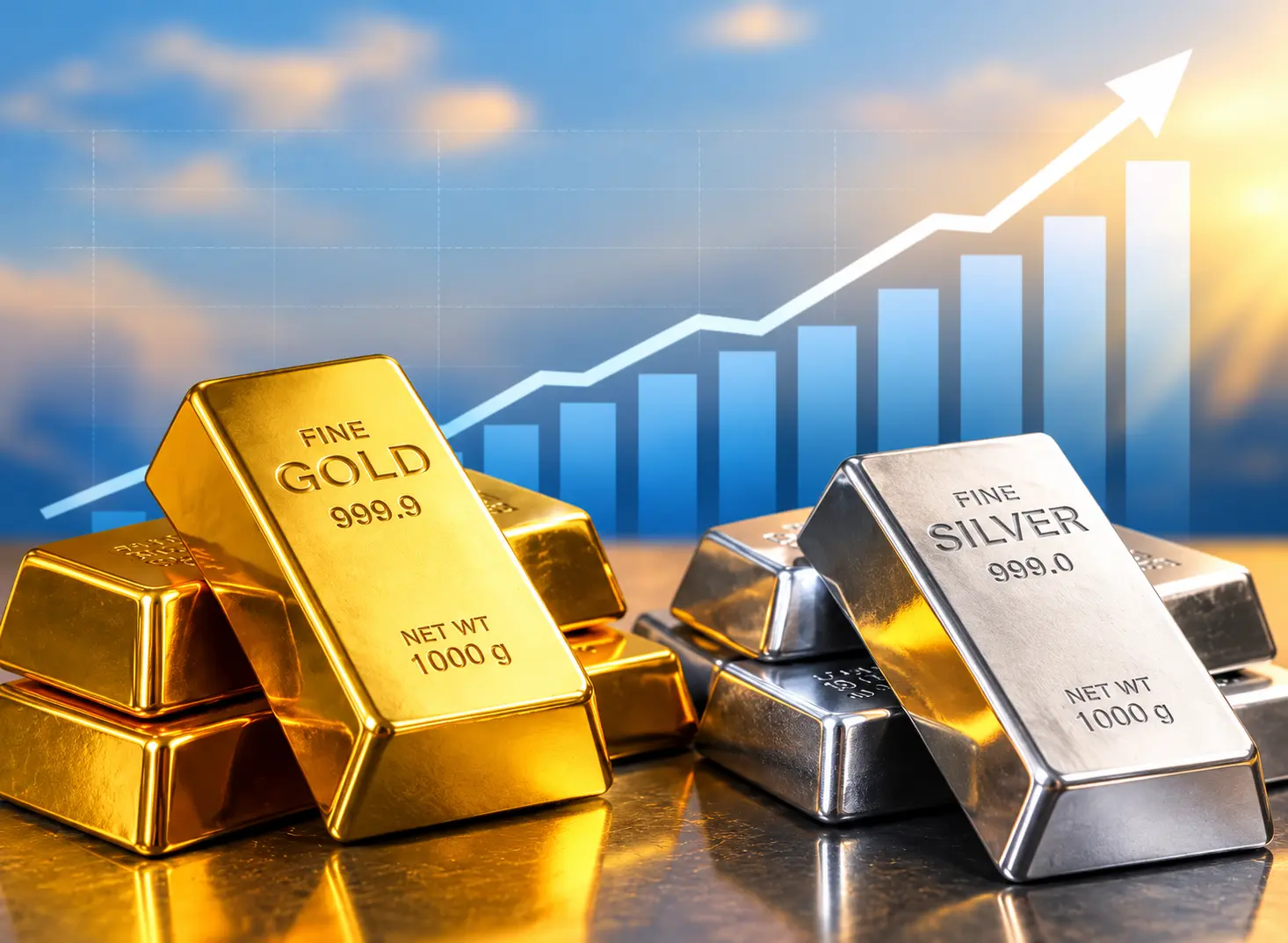
The precious metals market enters 2027 from an unusual position. Gold prices remain historically high. Silver has experienced another year of tight supply. Central banks continue buying gold. And investors are still dealing with inflation, interest rates, geopolitical uncertainty, and questions about the direction of the U.S. economy. For precious metals companies, those conditions are important for more than the price of gold and silver. They can directly influence precious metals lead demand, gold investor leads, gold IRA leads, and the consumers entering the precious metals sales funnel.
At The Leads Warehouse, we have watched precious metals lead generation move through multiple economic cycles. One lesson has remained consistent: investor interest in precious metals is heavily influenced by what consumers see happening around them.
The question heading into 2027 is not simply where gold and silver prices are going. It is what the economic environment could mean for consumers considering precious metals – and how precious metals marketers should prepare.
With multiple types of gold and silver investor leads – comparison site leads, real-time precious metals leads, and precious metals aged leads – we have every precious metals lead type covered, from exclusive leads to shared gold and silver leads (read our blog, “3 Types of Real-Time Precious Metals Leads: Co-Reg, Long-Form, And Comparison Site Leads”). All three types of precious metals leads can factor into a gold and silver investor’s marketing plans.
Gold enters 2027 at historically elevated levels
Gold has experienced enormous volatility. The World Gold Council reported that gold traded above $5,500 per ounce intraday in January 2026 before falling below $4,000 in June 2026. More recently, gold has again demonstrated resilience, moving above $4,000 even while U.S. Treasury yields have risen.
These changes are helpful to precious metals lead generation, because price movement itself creates consumer awareness. When gold makes headlines, consumers who may have ignored precious metals begin researching gold prices, physical gold, portfolio diversification, retirement assets, and Gold IRAs. Existing precious metals investors may also reconsider their allocations.
But high prices can have an impact in both directions. Some investors see record or near-record prices as confirming their concerns. Others wonder whether they have already missed the opportunity.
This makes precious metals sales scripting particularly important in 2027. A consumer responding to a precious metals lead advertisement may arrive with considerably more knowledge and more questions than a consumer responding several years ago.
Central banks continue supporting the gold story
One of the strongest structural stories behind gold has been central bank demand. The World Gold Council’s 2026 survey found that 89% of central bank reserve managers expect the global central bank gold holdings to increase over the next 12 months. And a record 45% expect their own institution’s gold holdings to increase.
These findings do not guarantee higher gold prices. However, they do provide precious metals marketers with an important backdrop. Gold is not being discussed solely as a speculative retail investment. Central banks themselves continue using gold as a reserve asset for diversification and risk management. For marketers buying gold leads, precious metals leads, and Gold IRA leads, that broader institutional demand can reinforce consumer interest in diversification.
Interest rates and inflation remain important
The Federal Reserve’s September 2026 projections illustrate another interesting setup for 2027. The median projection has PCE inflation declining from 3.7% in 2026 to 2.3% in 2027, while the federal funds rate remains around 4.1%.
This creates a complicated environment for precious metals. Higher interest rates can compete with gold because investors can earn meaningful yields from cash and fixed-income investments. At the same time, persistent inflation and uncertainty about future monetary policy can continue supporting demand for assets perceived as inflation hedges or stores of value.
Precious metals marketers should avoid assuming there is only one economic condition that generates demand. Inflation can create interest. Falling rates can create interest. Financial market volatility can create interest. Geopolitical uncertainty can create interest. The marketing message – and the sales script – needs to match what is actually motivating the consumer.
Silver brings a different story into 2027
Silver is both a precious metal and an industrial commodity, which gives the silver market a different set of demand drivers. The Silver Institute expects 2026 to represent the sixth consecutive annual silver market deficit. Its longer-term outlook also points to competing forces: high silver prices can encourage substitution and reduced silver usage in some applications, while automotive demand and expanding data center infrastructure could provide additional industrial support.
This creates another potential marketing opportunity. Consumers attracted to gold are often motivated by monetary policy, inflation, diversification, or economic uncertainty. Silver investors can respond to many of the same themes while also paying attention to industrial demand and supply constraints. For precious metals companies selling both metals, the consumer conversation does not necessarily need to begin and end with gold.
Other metals could lead the way
While gold and silver dominate the headlines heading into 2027, the real structural growth story lies in a handful of other specialized metals. Platinum is positioned for a strong cyclical recovery, with major institutions targeting up to $1,950 per ounce by late 2027 as South African supply constraints collide with rising hydrogen economy demand. Meanwhile, its sister metal, palladium, offers high-stakes tactical upside. Heavy Western tariffs on Russian supply are creating a tight, two-tier market with potential peaks near $2,500 per ounce despite long-term electric vehicle challenges.
For growth driven by raw industrial demand, copper is entering an era of critical structural deficits starting precisely in 2027. Backed by explosive demand from AI data center expansions, defense hardware, and electrical grid upgrades, Bank of America has upgraded its long-term forecast to $12,000 per ton. Simultaneously, critical battery minerals like lithium, cobalt, and nickel are undergoing a massive, multi-decade infrastructure pivot, with global extraction projected to double to feed the clean energy transition.
Integrating these other metals alongside traditional gold and silver holdings offers a powerful blend of macroeconomic defense and high-growth offense for 2027. Investors can capture this momentum either by holding physical platinum and palladium bullion or by targeting liquid equity exposure through specialized mining stocks and thematic ETFs. Navigating this broader materials sector requires balancing the immediate supply squeezes in the automotive metals against the long-term, multi-decade supercycle powering copper and battery infrastructure.
As other metals come to the fore, a gold and silver investing company can broaden its marketing and buy more precious metals leads, moving beyond gold and silver leads to a broader approach.
Economic uncertainty creates precious metals inquiries
Precious metals marketing has historically benefited from uncertainty because uncertainty creates questions. Consumers wonder what happens to their retirement savings if inflation remains elevated. They question whether stock market valuations are sustainable. They watch government debt, geopolitical conflicts, interest rates, currencies, and central bank policy.
That does not mean every concerned investor becomes a precious metals buyer. It means more consumers may begin researching. And research creates opportunities for precious metals lead generation.
This is where lead type becomes important. A co-registration precious metals lead may be created early in the consumer’s research process. A dedicated long-form precious metals lead has taken a more deliberate action. A comparison site lead may already be evaluating precious metals companies or Gold IRA providers.
The economic environment can create the demand, but the sales operation still needs to convert it.
Precious metals companies should prepare for lead demand, not predict gold prices
For marketers, predicting whether gold will finish 2027 at a particular price is less important than being prepared for changing investor sentiment. Precious metals companies should have the infrastructure to scale when interest increases. That includes having sufficient sales capacity, immediate response to real-time precious metals leads, consistent follow-up, effective email marketing, compliant text messaging, and scripts designed around the consumer’s reason for considering precious metals.
The Leads Warehouse generally views cadence, deliverability, and scripting as three core components of lead conversion. Those principles become even more important when markets are volatile. A recent disposition report from one of our precious metals clients showed that when contacting a real-time precious metals lead within minutes of generation, the consumer contact rate was 55%. But in the instances when this company delayed contacting their precious metals leads by hours or until the next day, their connection rate was only 1%. The entire sales process can be thrown off due to a delay in connecting alone.
As for scripting, a consumer responding because gold just reached another record high may require a different conversation than someone worried about inflation or a retirement investor researching a Gold IRA. Gold firms need to stay on top of market conditions to maximize the effectiveness of their precious metals leads.
What could 2027 mean for precious metals leads?
There are reasons for both optimism and caution. Central bank demand remains substantial, economic and geopolitical uncertainty continues, and silver faces an unusual supply-demand environment. At the same time, elevated precious metals prices can reduce some forms of demand, while higher interest rates provide investors with competing alternatives.
For precious metals marketers, that combination may actually be useful. Markets do not have to move straight upward to generate precious metals leads. They need to remain relevant enough that consumers continue asking questions. The companies positioned to capitalize on that interest will be those capable of buying and working precious metals leads across the funnel – from scalable co-reg leads to real-time long-form leads and higher-intent comparison site leads.
Whatever gold and silver do in 2027, economic uncertainty is unlikely to disappear. Geopolitical turmoil is likely to continue into 2027 as the wars in Iran and Ukraine are not slowing down. Precious metals lead generation picks up during times of uncertainty. Precious metals firms can shift their gold and silver lead strategy based on changes in global events. Increasing precious metals lead purchasing during these shocks is a proven way to expand market share. And, as long as consumers continue questioning where to place and protect their money, precious metals companies will have an opportunity to start the conversation. Are you ready to talk about how you can grow your precious metals sales pipeline?
About the author
James Schulze is the President and CEO of The Leads Warehouse, a marketing data company with over 20 years of experience in bringing lead generation solutions to companies selling into the home, automotive, financial, insurance, health and life, and legal sectors. He works directly with clients to optimize conversion strategies and ROI across multiple verticals.
Connect with James Schulze on LinkedIn:
https://www.linkedin.com/in/james-l-schulze
Read additional market analysis and commentary from James Schulze on Substack:
https://jameslschulze.substack.com
If you would like more information on how you can grow your precious metals sales, give The Leads Warehouse a call at 1-800-884-8371 or visit our website at https://theleadswarehouse.com.