

By James Schulze
This article discusses the IRS’ increased efforts to collect tax debt, which has made it more difficult for individuals to resolve their tax debt on their own. It also makes the case for tax debt relief firms to purchase tax debt leads to connect with the growing number of Americans who need their help.
The game has changed for Americans who owe back taxes. For years, people tried to fix their tax problems alone. They would write letters, file cheap appeals, or just try to ignore the bill. Those days are over. The federal government has updated its playbook. Despite face-saving political fights over budget cuts, the agency is pulling in cash faster than ever. They are using fresh rules and external help to squeeze everyday people. This creates a boon for reputable tax resolution firms.
Navigating tax relief without an expert has become a dangerous trap. Savvy resolution firms know this and are loading up on tax debt marketing, including aged tax debt leads, real-time tax debt leads, and tax debt call transfers.
Here’s how new government updates are driving desperate consumers straight to professionals:
Part 1: The Supreme Court arms the IRS with a new weapon
In June 2025, the United States Supreme Court delivered a ruling that changed everything for taxpayers fighting back taxes. The case, Commissioner of Internal Revenue v. Zuch, gave the government a terrifying new way to shut down legal battles instantly.
The end of the easy court appeal
In the past, when the IRS tried to seize a person’s house or car, the taxpayer had an escape hatch. They could file an appeal in Tax Court. This move would safely freeze all property seizures while the judge reviewed the case. It bought people time to work out a settlement. The Zuch decision completely took away that strategy. The Supreme Court ruled 8 to 1 that the Tax Court loses its power the second a tax balance hits zero.
The loophole the government uses now
This rule change sounds harmless, but it created an aggressive loophole for federal agents:
- A consumer sues the IRS in Tax Court to protect their property.
- The consumer files a new tax return that is owed a refund.
- The IRS instantly snatches that new refund via automated systems.
- The IRS applies the earned refund money to the old tax bill.
- The old balance drops to zero, and the property seizure is canceled.
- The Tax Court must throw out the entire lawsuit immediately.
Why people are trapped
If a consumer gets their case thrown out, they cannot ask the Tax Court for help. The court no longer has the power to make the agency give the applied-for refund back. To get their money back, the consumer must hire a lawyer. They must start all over again by filing a highly complex, expensive lawsuit in a regular Federal District Court. Most people do not have the time, money, or knowledge to do this.
Without a doubt, DIY tax defense is dead. Consumers need help before they file new returns. They need a team that understands how to block these automatic asset traps. This spike in danger is making real-time tax debt leads incredibly valuable for sales teams today. Smart tax debt relief firms are feasting on this ruling and increasing their budget for tax debt leads.
Part 2: Outsourced enforcement means no more hiding
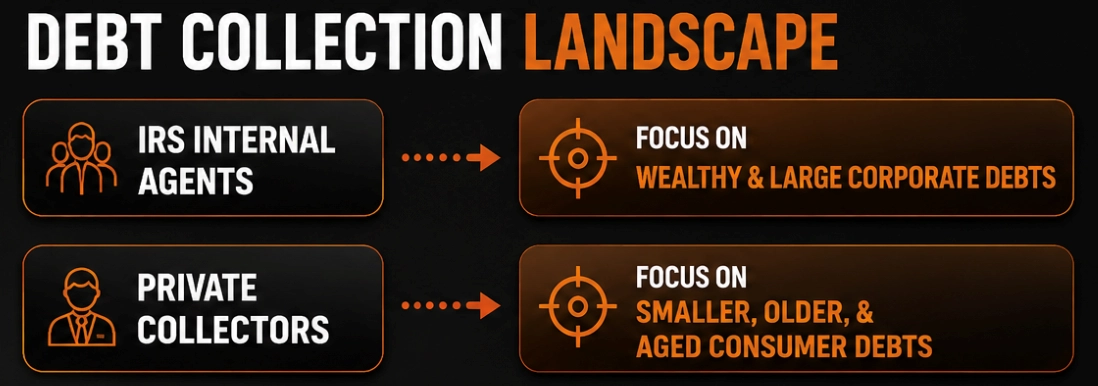
If a consumer avoids the courtroom, they still cannot escape the collection net. The government is rapidly expanding its controversial private debt collection program. According to reports from Yahoo Finance, third-party collection groups are aggressively taking over older accounts.
The push for private collectors
The federal tax agency has lost thousands of internal revenue agents over the last few years. To compensate for these staff shortages, they are handing millions of delinquent accounts over to private debt collection firms. These private agencies are relentless. They use advanced tracking software and constant phone calls to hunt down old accounts. They do not care if a debt is years old. If a name is in their database, they will pursue it.
A perfect storm of scams and fear
This outsourced phone blitz has created absolute chaos for the public. Regular people are being bombarded with calls from private firms claiming to work for the government.
- The fear – Debt collectors are trained to pressure people into making bad financial decisions.
- The confusion – Fake phone scammers are using this program as a cover story to steal identities.
- The risk – Terrified citizens are hanging up on legitimate collectors, causing their penalties to compound daily.
What private collectors can and cannot do
Everyday citizens do not understand their legal rights when these firms call. They do not realize that private collectors are strictly bound by consumer protection laws:
- Private companies cannot file tax liens against a house.
- Private companies cannot garnish wages or freeze bank accounts.
- Only official federal agents hold those extreme seizure powers.
Consumers are paralyzed by fear because they do not know these rules. They panic and agree to bad payment plans they cannot afford. A professional resolution firm can step in as a shield. They can immediately stop the third-party calls, audit the debt, and submit an official settlement proposal like an Offer in Compromise.
Tax resolution firms are doing particularly well with aged tax leads, as collections continue unabated. Consumers are currently being hounded by phone collectors and are begging for a professional way out.
Conclusion – the time is right to capitalize on tax debt leads
The federal collection machine is firing on all cylinders. The Zuch ruling closed the legal escape hatch for people trying to delay their cases. At the same time, outsourced private agencies are aggressively dialing millions of old phone numbers.
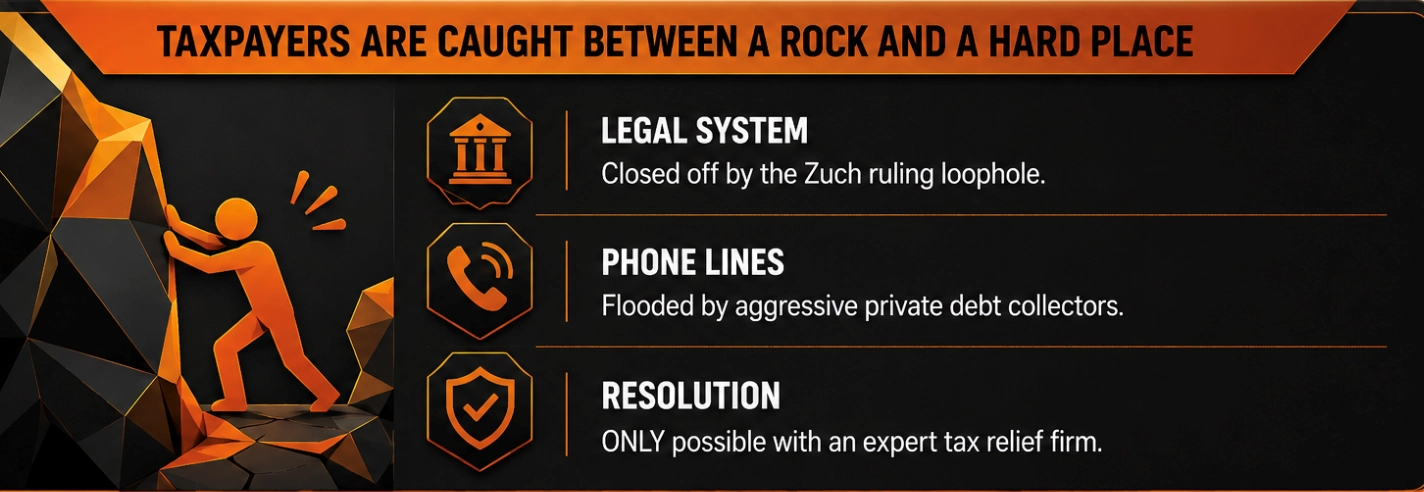
Consumers are stressed, confused, and completely outmatched. They quickly realize that going up against the government alone is a losing battle. They need professional help, and they need it right now.
For lead generation companies and marketing agencies, this is the perfect market storm. Demand for professional tax settlement assistance has never been higher.
For tax debt relief companies who want to maximize their revenue, now is the time to scale their campaigns. They can access high-intent prospects through several key channels:
- Real-time tax debt leads – Capture frantic consumers the exact moment they discover the IRS has frozen their assets or taken their refund check.
- Aged tax debt leads – Target the millions of citizens who are currently trapped in the newly expanded private debt collector database.
- Tax debt call transfers – Deliver hot, qualified prospects directly to resolution law firms right when they realize they cannot solve this issue alone.
- Tax debt leads validation – Ensure your data lists are clean so your buyers can outpace automated collection software.
The federal government is not slowing down its enforcement efforts. Do not wait for the market to cool. Invest heavily in tax debt leads today and connect desperate consumers with the professional protection they need. Are you ready to talk about how you can grow your tax debt sales pipeline?
About the author
James Schulze is the President and CEO of The Leads Warehouse, a marketing data company with over 20 years of experience in bringing lead generation solutions to companies selling into the home, automotive, financial, insurance, health and life, and legal sectors. He works directly with clients to optimize conversion strategies and ROI across multiple verticals.
Connect with James Schulze on LinkedIn:
https://www.linkedin.com/in/james-l-schulze
Read additional market analysis and commentary from James Schulze on Substack:
https://jameslschulze.substack.com
If you would like more information on how you can grow your tax debt relief sales, give The Leads Warehouse a call at 1-800-884-8371 or visit our website at http://theleadswarehouse.com.