
By James Schulze
This article discusses how tax resolution companies can combine a mix of tax debt real-time leads, aged leads, and call transfers to create a predictable sales pipeline. It also offers helpful insights on using multiple communication channels and CRM systems to reach prospects and nurture relationships.
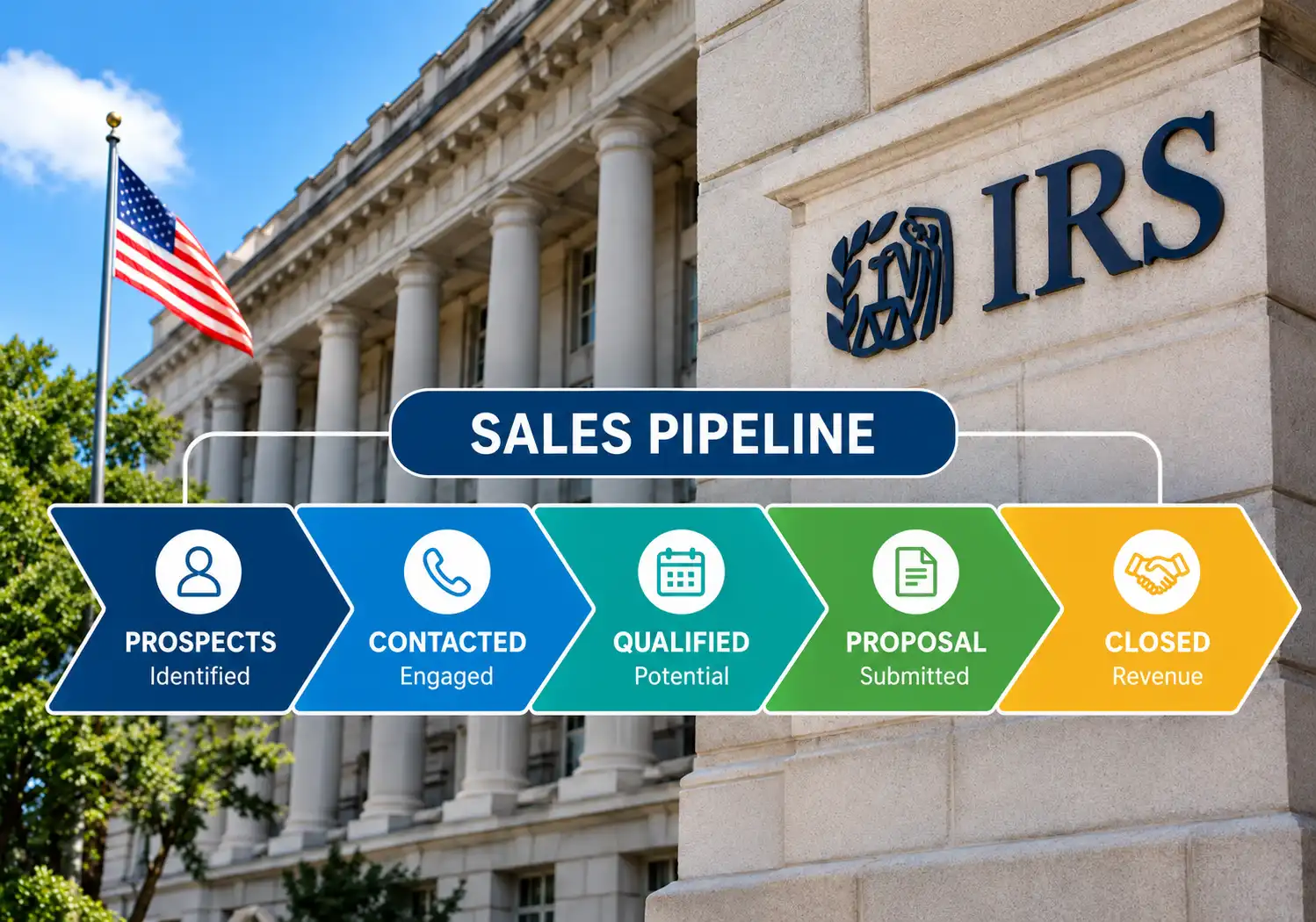
Tax resolution companies do not buy tax debt leads simply to create more phone calls. The goal is to build a predictable pipeline of consumers who owe the IRS enough money to potentially need professional tax resolution services.
It is critical to focus on the pipeline going into 2027. The IRS has ramped up tax debt enforcement by using private collection agencies to target high-balance accounts and non-filers. Taxpayers with unresolved debt face serious consequences, including wage garnishments, bank levies, or passport restrictions. For more information on tax collections, read our blog, “The IRS Is Accelerating Collections – Why Tax Resolutions Firms Should Prepare Now”.
A company buying federal income tax debt leads without a process for outbound calling, follow-up, appointment setting, CRM management, and reactivation is essentially buying opportunities without building a system to convert them, and they risk missing out on the potentially larger 2027 tax debt resolution market.
At The Leads Warehouse, we have worked with tax resolution companies for more than 20 years. We have seen the ebbs and flows of the tax resolution industry. We have also seen tech allow for new strategies to activate real-time tax debt leads, aged tax debt leads, tax lien data, and tax debt call transfers in very different ways. The companies that build sustainable acquisition channels understand that each tax debt lead type has a different job within the sales pipeline.
Start by segmenting tax debt leads
One of the biggest mistakes a tax resolution company can make is putting every tax debt lead into the same campaign. A real-time consumer who just requested information is different from a consumer who became an aged tax debt lead several months ago. A recently filed federal tax lien creates another type of opportunity. A consumer arriving through a tax debt call transfer is different again because that person is already on the phone (read our blog, “What Are Federal Income Tax Debt Leads? A Guide For Tax Resolution Companies”).
Segmentation allows the sales process to match the lead. For example, a tax resolution company might separate its pipeline into:
- Real-time tax debt leads
- Aged tax debt leads
- Newer tax lien data
- Older tax lien data
- Tax debt call transfers
That creates multiple acquisition channels rather than one giant list of tax debt prospects.
Real-time tax debt leads require speed
Real-time tax debt leads are valuable because the consumer has recently expressed interest in receiving information about resolving a tax problem. That advantage disappears quickly if nobody contacts the consumer. In one client campaign we reviewed at The Leads Warehouse, real-time leads contacted within approximately one minute produced a 55% connection rate. When the same company waited until the following day to make the first call on the remaining leads, its connection rate dropped to approximately 1%.
The lesson is simple: speed-to-lead matters. Real-time federal income tax debt leads should ideally enter the CRM and dialing environment automatically. The sales team should not have to download a spreadsheet, distribute leads manually, and wait for someone to begin calling.
To maximize return on ad spend (ROAS), a tax debt firm should put real-time tax debt leads into a long-term nurturing funnel too. At The Leads Warehouse, we see 50% of real-time tax debt leads become deals 90 days after the initial opt-in. A tax resolution firm should consider their real-time tax debt leads to be their own aged leads in the future.
Automation turns real-time tax debt lead generation into a predictable acquisition channel.
Aged tax debt leads are an outbound sales product
Aged tax debt leads require a different approach. The consumer may have originally requested tax debt assistance weeks or months earlier, but the underlying problem may still exist. Federal income tax debt does not disappear simply because the original lead became older. This makes aged tax debt leads particularly useful for companies with strong outbound calling operations. Instead of paying a premium for every new inquiry, a tax resolution company can acquire larger quantities of aged tax debt leads and use dialing capacity to create conversations.
Some tax resolution companies use an opener-closer model. The opener works through the lead volume, establishes contact, identifies consumers who still have a qualifying tax problem, and then moves qualified opportunities to an experienced closer.
Another reason aged tax debt leads work is that consumers and the IRS move slowly in the collection process. From the first notice of tax due to final resolution, tax debt over $10,000 typically takes up to 18 months, depending heavily on the chosen resolution path and the complexity of the consumer’s financial disclosures.
Use SMS and email as part of the follow-up process
Phone calls should not necessarily operate alone. Where appropriate and compliant, SMS and email can support outbound calling by giving consumers additional opportunities to respond. A tax debt prospect may ignore an unfamiliar telephone number but recognize the reason for the call after seeing an email. Another consumer may respond to a text message and request a better time to speak.
The objective is not simply to send more messages. It is to coordinate communication. At The Leads Warehouse, our client product card detailing how to use our tax leads provides a clear suggested cadence on how to incorporate calling, texting, and emailing tax debt leads. Call activity, compliant text messaging, email follow-up, and CRM activity should work together so the sales team knows exactly what has happened with each tax debt lead.
Turn CRM into a nurture system
A CRM should be more than a place to store tax debt leads. It should tell the sales team what needs to happen next. Tax debt prospects can be categorized by debt amount, contact status, appointment status, lead age, lead source, disposition, and where appropriate, their stage in the tax resolution sales process.
This becomes especially important because not every consumer is ready to hire a tax resolution company on the first conversation. Some need additional information. Others need time. Some cannot be reached immediately. A structured CRM nurture process prevents those tax debt opportunities from simply disappearing.
Appointment setting creates another layer in the pipeline
Not every person making the initial contact needs to close the account. Tax resolution companies can use lead generation to create appointments for more experienced salespeople or tax professionals. An outbound team can work real-time and aged tax debt leads, identify consumers who meet the firm’s criteria, and schedule qualified consultations. This separates prospecting from closing.
For organizations with sufficient lead volume, dedicated appointment setters or call center personnel can keep higher-value closers focused on consumers who have already been contacted and qualified.
Tax debt call transfers can feed closers directly
Tax debt call transfers shorten the process even further. Instead of delivering a data lead for outbound follow-up, a transfer delivers a consumer who is already participating in a live conversation.
At The Leads Warehouse, our tax debt call transfer process uses a 120-second qualification buffer. That gives the receiving company time to determine whether the caller meets its criteria before the call becomes billable. Therefore, call transfers can function as a separate acquisition channel alongside real-time and aged tax debt leads.
The script is still very important. A company needs an effective qualification script during the beginning of the call and a closing process once the consumer qualifies. At The Leads Warehouse, direct client disposition reports confirm that tax resolution firms that use the buffer effectively close more deals and lower their cost per acquisition (CPA). We provide suggested scripting for the buffer period. Utilizing scripting, sales training, and role playing is critical to optimizing tax call transfers.
Build multiple tax debt acquisition channels
The strongest tax debt pipeline does not necessarily depend on one source. Real-time tax debt leads can provide immediate opportunities. Aged tax debt leads can provide scalable outbound volume. Tax debt call transfers can deliver live conversations (read our blog, “Real-Time Tax Debt Leads vs. Aged Tax Debt Leads vs. Tax Debt Call Transfers: Which Fits Your Sales Strategy?”). CRM nurture can develop prospects who are not ready today. Reactivation can create additional opportunities from leads the company has already acquired.
The economics should ultimately be measured beyond cost per lead (CPL). A tax resolution company should understand its contact rate, qualification rate, appointment rate, show rate, close rate, and cost per acquisition for each tax debt lead channel. That allows management to allocate budget toward the channels that are actually producing clients.
The objective is not simply to buy more tax debt leads. It is to build a system where outbound calling, SMS and email, CRM nurture, appointment setting, call center capacity, segmentation, call transfers, and reactivation work together to create a more predictable tax resolution sales pipeline. Are you ready to talk about how you can grow your tax debt sales pipeline?
About the author
James Schulze is the President and CEO of The Leads Warehouse, a marketing data company with over 20 years of experience in bringing lead generation solutions to companies selling into the home, automotive, financial, insurance, health and life, and legal sectors. He works directly with clients to optimize conversion strategies and ROI across multiple verticals.
Connect with James Schulze on LinkedIn:
https://www.linkedin.com/in/james-l-schulze
Read additional market analysis and commentary from James Schulze on Substack:
https://jameslschulze.substack.com
If you would like more information on how you can grow your tax debt relief sales, give The Leads Warehouse a call at 1-800-884-8371 or visit our website at https://theleadswarehouse.com.